German Language Tips for Ausbildung Program: A Complete Guide for Pakistani Students

Get German language tips for Ausbildung from Globaid Consultants. Maybe a cousin in Frankfurt told you about it, or you saw a YouTube video promising a paid vocational training program in Germany with almost no tuition fees. It sounds like the perfect opportunity — and for thousands of Pakistani students every year, it genuinely is.
But here’s the part nobody tells you clearly enough: your Ausbildung application does not stall at the visa office. It stalls at the German language stage, months before you ever see a visa form.
Every year, Globaid Consultants meets students who have already picked their trade, already found a company willing to sign a training contract, and already dreamed up their new life in Germany — only to realize their German is nowhere near the level German employers and embassies expect. Some panic and rush through a two-month crash course. Others give up entirely, assuming German is “too hard” for a Pakistani student who grew up speaking Urdu and English.
Neither reaction is necessary. German is learnable — Pakistani students pass B1 and even B2 exams every intake — but only with the right strategy, consistent practice, and realistic expectations about timelines.
This guide breaks down exactly what level of German you need, how long it genuinely takes, which mistakes waste the most time, and how to build a study plan that gets you exam-ready before your December 2026 or January 2027 intake. Whether you’re a fresh Intermediate student, a graduate, or a working professional considering a career switch to Germany, this article is written to get you unstuck and moving forward.
Ready to find out where you stand? Book a free consultation with Globaid Consultants and get a personalized German language and Ausbildung roadmap.
What Is Ausbildung and Why Pakistani Students Are Choosing It
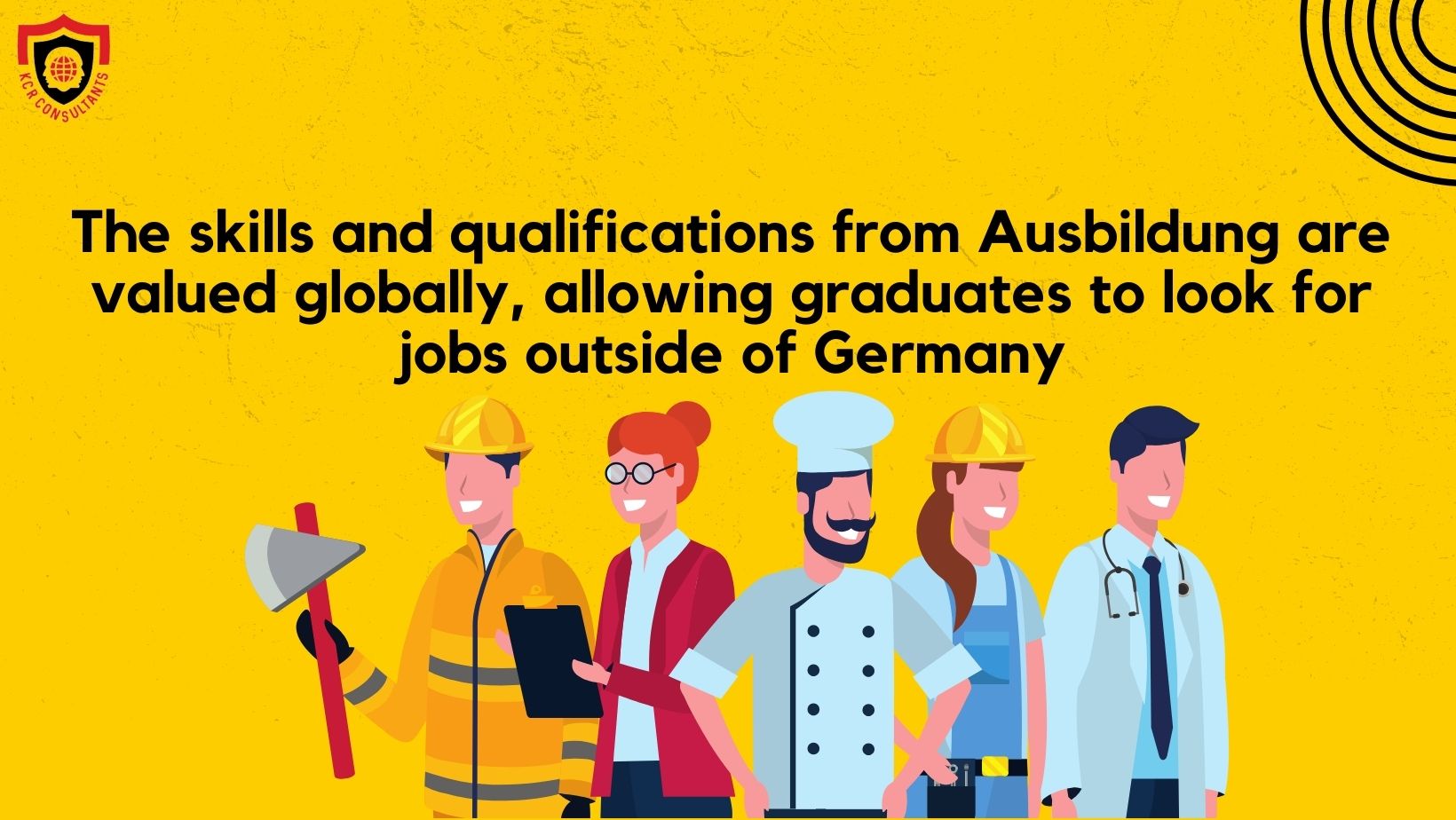
Ausbildung is Germany’s dual vocational training system. Instead of sitting only in a classroom, you split your time between a training company (where you earn a monthly stipend) and a vocational school (Berufsschule) where you study the theory behind your trade. It typically runs 2–3.5 years, depending on the profession.
Popular Ausbildung fields for Pakistani students include:
- Nursing and healthcare (Pflegefachmann/-frau)
- IT and computer science
- Hotel management and hospitality
- Electrical and mechanical engineering trades
- Logistics and warehouse management
- Retail and office administration
Why is it attractive? A few clear reasons:
- Low or no tuition fees at public vocational schools
- Monthly salary during training (usually between €800 and €1,300 depending on the trade and year)
- Direct pathway to a work permit and long-term residence after completion
- Real, recognized qualification across the EU
The catch is straightforward: German companies are not hiring you to sit quietly in a corner. They need you to understand instructions, talk to colleagues and patients or customers, and follow safety procedures — all in German. That’s why the language requirement isn’t a bureaucratic formality. It’s the actual job requirement.
Why German Language Skills Matter More Than You Think
Pakistani students sometimes assume that because they’re fluent in English, German companies will make exceptions. In a handful of English-speaking corporate internships, that might be true. In Ausbildung, it almost never is.
1. Your training contract depends on it.
German employers interview candidates directly, often over video call. If you can’t hold a basic conversation in German, most companies won’t proceed, regardless of how strong your CV looks on paper.
2. Berufsschule is taught in German.
Your vocational school classes, textbooks, and exams are in German. Weak language skills don’t just make training harder — they can put your entire contract at risk if you fail modules.
3. The visa itself often requires proof.
German embassies and consulates typically expect a recognized language certificate (commonly B1, sometimes A2 depending on the visa category and profession) as part of your Ausbildung visa file.
4. Daily life depends on it.
From renting an apartment to visiting a doctor to opening a bank account, German is the default language in most of the country outside major international hubs.
The good news: none of this requires native fluency. It requires functional, confident, everyday German — which is absolutely achievable with focused effort.
Which German Level Do You Actually Need for Ausbildung?
Germany uses the Common European Framework of Reference for Languages (CEFR), with six levels: A1, A2, B1, B2, C1, C2. Here’s what each level realistically means for you.
| Level | What You Can Do | Relevance to Ausbildung |
| A1 | Basic greetings, simple personal information | Starting point only — not sufficient for visa or interviews |
| A2 | Simple daily conversations, shopping, directions | Minimum for some Ausbildung visa categories, but risky as your only certificate |
| B1 | Can handle work, school, and daily-life conversations confidently | Most commonly required level for Ausbildung visa and employer interviews |
| B2 | Fluent in professional and academic settings | Preferred for competitive placements, healthcare and IT roles |
| C1/C2 | Near-native fluency | Not required for Ausbildung, more relevant for university study |
Expert Tip: Most reputable training companies and embassies treat B1 as the practical minimum. Some healthcare and nursing Ausbildung programs, along with certain federal states, now expect B2, especially for patient-facing roles. Always confirm the exact requirement for your specific trade and employer — this is exactly the kind of detail Globaid Consultants checks case-by-case before you commit to a course.
Pro Tip: Don’t just aim to “pass” B1. Aim to genuinely use B1 comfortably, because your first weeks in Germany will test your listening and speaking far more than any exam does.
How Long Does It Really Take to Learn German for Ausbildung?
This is the question every student asks, and the honest answer depends on your starting point, study intensity, and consistency.
Realistic timelines for Pakistani students starting from zero:
- A1 level: 6–8 weeks (with daily study, 2–3 hours)
- A2 level: additional 6–8 weeks
- B1 level: additional 8–12 weeks
Total average: 6–9 months of consistent, structured learning to reach B1, assuming regular classes plus self-study. Students who study part-time or inconsistently often take 12–14 months, which can push them past their target intake.
Warning: Be extremely cautious of institutes promising “B1 in 6 weeks” with little daily commitment. German requires cumulative grammar building — verb conjugation, cases (Nominativ, Akkusativ, Dativ, Genitiv), and sentence structure compound on each other. Rushing the foundation almost always shows up as failure at the B1 speaking or writing module.
If you’re targeting the December 2026 or January 2027 intake, the ideal time to start structured German classes is roughly now through early autumn 2026, giving yourself a comfortable buffer before visa processing and document deadlines.
Step-by-Step German Learning Roadmap for Pakistani Students
Step 1: Assess your starting point — Take a free placement test to confirm you’re truly starting at A1, not skipping ahead with false confidence.
Step 2: Enroll in a structured A1–B1 course — Choose an institute with certified instructors, not just an app or a friend teaching informally. Structure matters more than speed.
Step 3: Build a daily habit, not occasional study — 20–30 minutes daily beats a 3-hour weekend cram session. Language learning depends on repetition and spaced recall.
Step 4: Practice all four skills separately — Reading, writing, listening, and speaking are tested separately in the B1 exam. Don’t only focus on vocabulary lists — practice writing short paragraphs and speaking out loud from week one.
Step 5: Immerse yourself outside the classroom — Switch your phone’s interface language, watch simple German YouTube channels, listen to slow-German podcasts during your commute.
Step 6: Take mock exams before the real one — Simulate exam conditions at least twice before your actual Goethe or telc exam date.
Step 7: Book your official exam early — Slots fill up fast, especially close to intake deadlines. Book your B1 exam date as soon as your instructor confirms readiness.
Step 8: Start your Ausbildung and visa documentation in parallel — Don’t wait until you pass B1 to start your APS process, document collection, and employer search — these can run alongside your final months of language study.
Best German Language Tips That Actually Work
- Learn German the way you’d learn to ride a bike through repetition, not theory memorization. Grammar rules matter, but they stick only once you’ve used them in real sentences repeatedly.
- Master the verb conjugation system early. German sentence structure depends heavily on verb position and conjugation. Get comfortable with present tense conjugation before moving to past and future forms.
- Don’t skip the cases (Nominativ, Akkusativ, Dativ, Genitiv). Pakistani students often postpone learning cases because they feel abstract. This backfires at B1, where correct case usage is directly graded in writing and speaking.
- Build vocabulary in themed clusters, not random word lists. Learn “hospital vocabulary,” “workplace vocabulary,” and “daily routine vocabulary” as sets — this mirrors how B1 topics are actually tested.
- Speak from day one, even if you sound wrong. Silent learners plateau. Speaking mistakes are how fluency develops; waiting for “perfect” German before speaking delays your progress by months.
- Use spaced repetition apps for vocabulary retention. Apps that use flashcard-style spaced repetition are proven to be far more effective than one-time vocabulary lists.
- Watch German content with German subtitles, not English. This trains your brain to connect sound and spelling directly in German, instead of translating through English.
- Practice writing short daily journal entries in German. Even three sentences a day about your morning builds writing fluency for the exam’s written module.
- Find a study partner or WhatsApp study group. Peer accountability and casual conversation practice dramatically speed up spoken confidence.
- Simulate real exam conditions monthly. Time yourself. Real exam pressure is different from relaxed practice — build tolerance for it early.
Where to Learn German in Pakistan
Pakistani students have several credible options for structured German learning:
- Goethe-Institut Pakistan (Karachi and Lahore) — the internationally recognized standard, often the most trusted certificate by German employers and embassies
- Private language institutes in major cities offering A1–B1 courses aligned with Goethe or telc standards
- Online German courses combined with local speaking practice groups
- Globaid Consultants’ partner language programs, designed specifically around Ausbildung timelines and visa documentation needs
What to check before enrolling anywhere:
- Is the instructor certified to teach CEFR-aligned courses?
- Does the institute offer mock exams before the real one?
- Is the certificate recognized by German embassies (Goethe, telc, ÖSD)?
- Does the course schedule match your intended intake?
Not sure which option fits your timeline and budget? Request a free eligibility assessment from Globaid Consultants — we’ll map out a language plan that matches your target intake realistically, not optimistically.
B1 German Exam: What to Expect and How to Pass It
The B1 exam (commonly Goethe-Zertifikat B1 or telc Deutsch B1) tests four sections:
- Lesen (Reading): Understanding everyday texts, letters, and short articles
- Hören (Listening): Following conversations, announcements, and short reports
- Schreiben (Writing): Writing a personal letter/email and a short opinion piece
- Sprechen (Speaking): A conversation, a short presentation, and a planning discussion with a partner
How to prepare specifically for each section:
- For Lesen, practice skimming for keywords before reading in detail — you don’t need to understand every word to answer correctly.
- For Hören, train with real exam-format audio, not just casual conversations. Exam audio has a specific pace and vocabulary range.
- For Schreiben, memorize solid opening and closing phrases for formal letters — this alone can save you valuable time under pressure.
- For Sprechen, practice the “planning a task together” format with a partner, since this specific format catches many first-time test takers off guard.
Checklist Before Exam Day
☐ Confirm your exam center and exact reporting time
☐ Bring original CNIC/passport as required by the test center
☐ Complete at least two full-length mock exams under timed conditions
☐ Review your most common grammar mistakes one final time
☐ Get a full night’s sleep — fatigue affects listening comprehension the most
Common Mistakes Pakistani Students Make While Learning German
Mistake 1: Starting too late relative to their intake deadline. Students often begin German only after securing a training contract offer, leaving 2–3 months for what realistically needs 6–9.
Mistake 2: Relying only on mobile apps without structured grammar teaching. Apps are excellent for vocabulary but rarely teach case systems and sentence structure in enough depth for B1 writing and speaking modules.
Mistake 3: Avoiding speaking practice out of fear of mistakes. This is the single biggest reason capable students fail the Sprechen section — not a lack of vocabulary, but a lack of speaking practice under pressure.
Mistake 4: Choosing an uncertified or informal tutor to save money. A cheaper course that doesn’t prepare you properly for the actual exam format often costs more in the long run through repeated exam attempts and delayed visa timelines.
Mistake 5: Ignoring listening practice until the final weeks. Listening comprehension develops slowly and cannot be cured with last-minute cramming the way vocabulary sometimes can.
Myth vs Fact: German Language and Ausbildung
Myth 1: “My English is strong, so German companies will accept me anyway.”
Fact: Nearly all Ausbildung employers require a German certificate, typically B1, regardless of your English fluency.
Myth 2: “German is too difficult for Pakistani students to learn quickly.”
Fact: With structured classes and daily practice, most students reach B1 within 6–9 months — no different from language learning timelines worldwide.
Myth 3: “I can start German after I get my training contract.”
Fact: Most employers interview in German or expect at least A2–B1 proof before signing a contract, so language preparation needs to start earlier.
Myth 4: “Any German course or certificate will be accepted by the embassy.”
Fact: Embassies generally expect certificates from recognized bodies such as Goethe-Institut, telc, or ÖSD — not informal or unaccredited course completions.
Myth 5: “Once I reach Germany, I’ll pick up the language naturally without formal study.”
Fact: While immersion helps a lot, Berufsschule coursework and workplace communication both require a solid pre-arrival foundation — informal exposure alone isn’t enough for the technical vocabulary you’ll need from day one.
Documents Required for Ausbildung Visa (With German Certificate)
While requirements vary slightly by German consulate and individual case, the standard document checklist typically includes:
☐ Valid passport (with sufficient validity)
☐ Ausbildungsvertrag (signed training contract from a German company)
☐ German language certificate (commonly B1, sometimes A2 depending on the case)
☐ Educational certificates and transcripts (Matric, Intermediate, or equivalent)
☐ APS certificate (where applicable)
☐ Proof of financial means (blocked account or equivalent)
☐ Health insurance proof
☐ Passport-size photographs (as per embassy specifications)
☐ Motivation letter / SOP
☐ Visa application form and appointment confirmation
Warning: Visa requirements and document checklists can change between intakes. Always verify the current, exact list for your specific consulate before submission — Globaid Consultants keeps this updated for every intake and cross-checks your file before you apply.
Estimated Costs: Language Course, Visa, and Living Expenses
These are general planning estimates only. Actual costs vary by city, institute, and current exchange rates — confirm exact figures with your consultant before budgeting.
| Expense Category | Approximate Range |
| German language course (A1–B1, Pakistan) | Varies by institute — request current pricing |
| Goethe/telc B1 exam fee | Set by the testing body, subject to periodic revision |
| APS certification | Set by APS, subject to periodic revision |
| Blocked account (proof of funds) | Set annually by German authorities |
| Visa application fee | Set by the German consulate |
| Initial living costs on arrival | Varies significantly by city (Munich and Frankfurt cost more than smaller towns) |
Pro Tip: Ausbildung is one of the more affordable study-abroad pathways because tuition is typically low or free, and you earn a monthly stipend during training — but your pre-departure costs (language course, exams, visa, blocked account) should still be planned for well in advance.
Timeline for December 2026 and January 2027 Intake
| Milestone | Suggested Timing |
| Start structured German classes | As early as possible — ideally now |
| Reach A2 level | Within 3–4 months of starting |
| Reach B1 level | Within 6–9 months of starting |
| Book and pass B1 exam | At least 2–3 months before intended visa application |
| Secure Ausbildung training contract | In parallel with final language stage |
| Begin APS and document preparation | Alongside language completion |
| Submit visa application | Per consulate-specific processing timelines |
| Departure for December 2026 / January 2027 intake | After visa approval |
Expert Tip: Visa processing times fluctuate and can extend during peak intake seasons. Building in a buffer of several extra weeks beyond the “minimum” timeline is one of the simplest ways to protect your intake date.
Scholarship and Financial Support Tips
While Ausbildung itself isn’t scholarship-funded the way university study often is (since you earn a training salary), Pakistani students can still reduce their overall financial burden:
- Look into DAAD resources for broader study-in-Germany financial guidance, even if Ausbildung-specific funding is limited.
- Ask your prospective training company about relocation or housing support — some companies offer this, especially in high-demand sectors like healthcare and IT.
- Budget your blocked account and pre-departure costs early so you’re not scrambling close to your visa appointment.
- Compare language institute packages — some bundle exam fees or offer discounts for early enrollment ahead of a specific intake.
Visa Interview Tips: How to Handle German Language Questions
Some consulates or employers may test your spoken German informally during interviews, even if you’ve already submitted a certificate. Prepare for this by:
- Practicing simple self-introductions confidently in German (name, background, why Ausbildung, why this trade)
- Being ready to explain your training contract and company in basic German
- Staying calm if you don’t understand a question — asking politely for repetition in German (“Können Sie das bitte wiederholen?”) is normal and acceptable
- Avoiding memorized, robotic-sounding answers — interviewers can usually tell, and natural short answers land better than rehearsed paragraphs
Warning: Don’t exaggerate your language level on paper. If your certificate says B1 but you can barely hold a basic conversation, this mismatch creates serious problems during interviews and even after arrival in Germany.
How Globaid Consultants Supports Your Ausbildung Journey
Globaid Consultants works with Pakistani students at every stage of the Ausbildung pathway — not just the visa paperwork at the end. Our support typically includes:
- Eligibility assessment for your target trade and background
- Guidance on structured German language learning, aligned to your intake timeline
- Support connecting with Ausbildung training opportunities and employers
- APS guidance and documentation review
- SOP and motivation letter writing support
- Visa application guidance and interview preparation
- Accommodation support for your arrival in Germany
We don’t promise shortcuts around the language requirement — because there aren’t any that actually work. What we do offer is a realistic, well-sequenced plan so your German preparation, employer search, and visa documentation move forward together instead of stalling each other.
Ready to start your Ausbildung journey the right way? Book your free consultation with Globaid Consultants today or WhatsApp us to get your personalized roadmap.
Expert Tips from a Study Abroad Consultant
- Start your German language course before you start seriously searching for a training contract — not after.
- Treat B1 as your working minimum, not your final goal; B2 opens more doors, especially in healthcare.
- Choose an institute that offers mock exams, not just textbook teaching.
- Speak German out loud daily, even alone, from your very first week of class.
- Keep a running vocabulary notebook organized by real-life topics (work, health, daily routine).
- Don’t wait for “perfect” German to start applying for Ausbildung positions — many employers accept committed A2/early-B1 candidates who show clear improvement.
- Build a study routine around your existing schedule, not an idealized one you won’t stick to.
- Track your progress with monthly self-assessments, not just end-of-course exams.
- Prepare your documents in parallel with your language course, not sequentially.
- Work with a consultant who reviews your full file — language, documents, and visa — together, not in isolation.
Checklist Before You Apply for Ausbildung
☐ Confirmed your target trade and researched typical language requirements
☐ Enrolled in a structured, certified German course
☐ Set a realistic exam date aligned with your intake
☐ Completed at least two full mock exams
☐ Started collecting required documents (educational certificates, passport, etc.)
☐ Researched APS requirements for your case
☐ Discussed blocked account and financial proof requirements
☐ Booked a consultation with a study abroad consultant to review your full file
☐ Prepared a basic self-introduction in German for interviews
☐ Set a realistic visa application timeline with buffer weeks
Frequently Asked Questions
1. Is B1 German enough for Ausbildung?
For most Ausbildung programs and visa categories, B1 is the commonly expected minimum. Some healthcare and patient-facing roles may expect B2, so always confirm the exact requirement for your specific trade.
2. How many months does it take to learn German to B1 level?
Most Pakistani students starting from zero need around 6–9 months of consistent, structured study to comfortably reach B1.
3. Can I do Ausbildung without knowing German at all?
It’s very difficult. Almost all training companies and vocational schools require at least basic to intermediate German from the start, since both workplace communication and coursework are conducted in German.
4. Is Ausbildung free in Germany?
Public vocational training programs typically have low or no tuition fees, and trainees usually receive a monthly stipend, though exact terms vary by company and trade.
5. Can Pakistani students apply for Ausbildung after Intermediate?
Yes, many Ausbildung programs accept students with Intermediate-level education, though specific eligibility depends on the trade and the employer’s requirements.
6. What is the salary during Ausbildung in Germany?
Trainee salaries vary by trade, company, and training year, generally increasing each year of the program. Exact figures should be confirmed per employer and current wage agreements.
7. Which German certificate is accepted for Ausbildung visa applications?
Certificates from recognized providers such as Goethe-Institut, telc, or ÖSD are generally accepted by German consulates.
8. How difficult is German for Pakistani students specifically?
German has a different grammar structure than English or Urdu, particularly around cases and verb placement, but with structured teaching and consistent practice, Pakistani students regularly reach B1 within a normal timeframe.
9. Can I take my B1 exam in Pakistan?
Yes, B1 exams are available through Goethe-Institut and other recognized testing centers in major Pakistani cities.
10. How can Globaid Consultants help with my Ausbildung application?
Globaid Consultants supports eligibility assessment, German language guidance, APS support, SOP writing, documentation review, and visa preparation, helping you move through each stage without unnecessary delays.
Conclusion and Next Steps
German isn’t the obstacle standing between you and Ausbildung — an unrealistic timeline is. Students who start early, follow a structured course, and practice speaking from day one consistently reach B1 well within a normal preparation window. Students who wait, guess, or rely on shortcuts are the ones who end up rushing, and rushing is exactly what causes exam failures and missed intakes.
If you’re serious about the December 2026 or January 2027 Ausbildung intake, the smartest move you can make right now is getting a clear, honest assessment of where you currently stand — and what it will actually take to get you exam-ready and visa-ready on time.
Globaid Consultants has guided Pakistani students through this exact process — from their first German class to their visa approval and departure. Let us build your personalized roadmap.
- Book a Free Consultation with Globaid Consultants
- WhatsApp Globaid Consultants Now
- Request Your Free Eligibility Assessment